
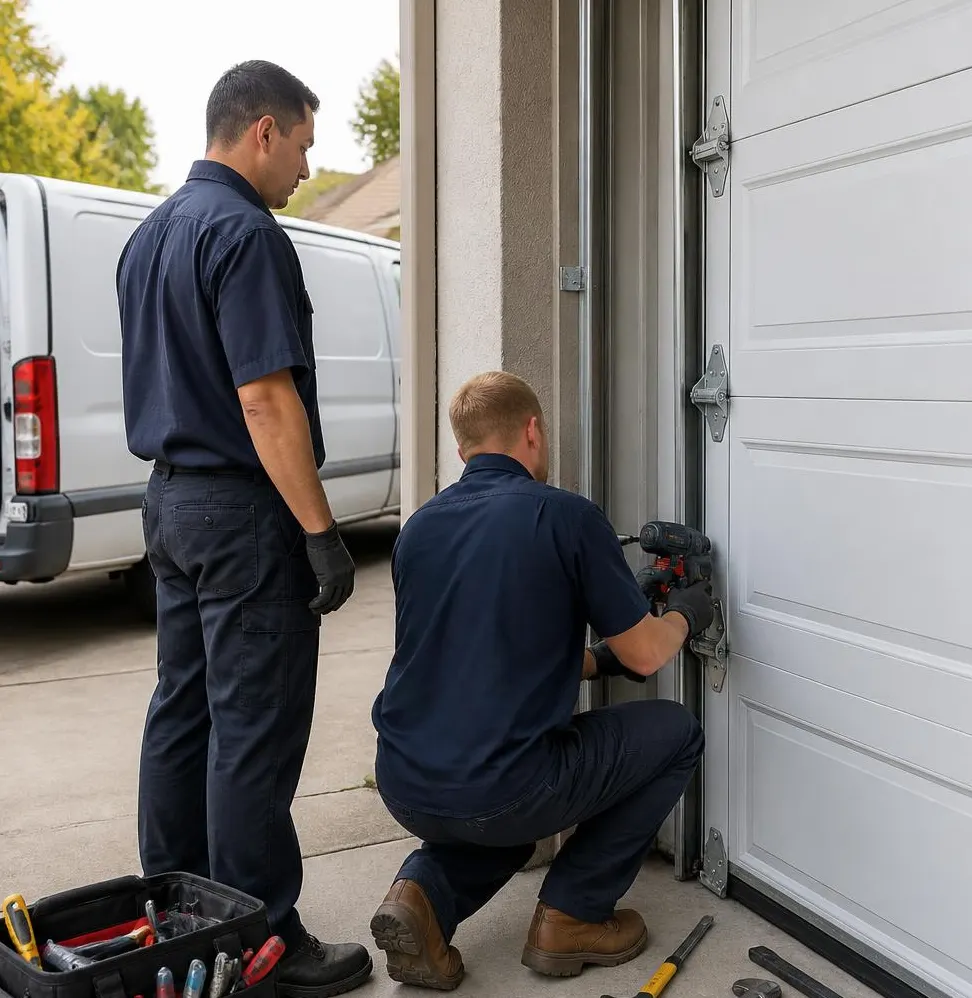
What That Grinding and Banging Is Actually Costing You
A noisy garage door opener rarely stays a cosmetic nuisance through a northern Westchester winter. The same freeze-thaw cycles that crack driveways also work on loose hardware, dry bearings, and worn rollers. Ignore the noise through one more season and you're often not looking at a quieter fix in spring — you're looking at a seized roller that cracks a track, a chain that jumps and strips a gear, or an opener motor straining so hard in the cold that it finally burns out. On the older housing stock common around Bedford Hills, Katonah, and Armonk, original doors and openers are already carrying decades of wear, and winter is what tends to finish the job. A loud door is also a door that's working harder than it should, which shows up as a bigger strain on the springs — and spring failure is not a DIY repair.
Step-by-Step: From Cheap Fixes to a Full Belt-Drive Swap
1. Listen before you touch anything
Grinding, squeaking, rattling, and banging each point to different problems. Squeaking usually means dry hinges or rollers. Rattling is loose hardware. Grinding often means a worn roller bearing. A loud bang at the top or bottom of the travel can mean the door is off its track slightly or the opener's limit settings are off. Spend five minutes running the door and noting where in the cycle the noise happens.
2. Tighten every bolt and bracket (homeowner task)
Tools needed: socket wrench or ratchet set, screwdriver.
Vibration loosens the nuts and bolts holding the track brackets, hinges, and the opener's mounting bracket to the ceiling joist. Go panel by panel and bracket by bracket, snugging everything down. This alone quiets a surprising number of doors.
3. Lubricate the moving parts correctly (homeowner task)
Tools needed: a silicone-based or lithium garage door lubricant (not WD-40, which is a solvent and attracts grit).
- Hinges and rollers (the wheel-to-track contact points)
- The torsion spring itself, lightly, without touching the cones
- The opener's drive chain or screw rail
Wipe off excess so it doesn't collect road salt and grime tracked in on car tires. In humid summers and salty winters alike, dry, unlubricated metal is the single most common cause of new noise.
4. Inspect and replace worn rollers (homeowner for plastic rollers, technician for steel)
Rollers with visible wobble, flat spots, or cracked plastic are a direct source of grinding and banging. Standard plastic rollers are inexpensive and reasonably simple to swap one at a time, leaving the others supporting the door. Steel ball-bearing rollers under tension, or any roller near the bottom bracket where cables attach, should go to a technician — the cable is under spring tension and an amateur attempt can cause injury.
5. Check the opener's chain tension (homeowner can inspect, technician should adjust)
A chain-drive opener with a loose chain will slap against the rail with every cycle. Most openers have a tensioning bolt described in the manual. If you're not confident adjusting it without over-tightening — which strains the motor — this is a quick technician visit rather than a trial-and-error project.
6. Stop here if the noise involves the spring
Any popping, creaking, or grinding coming specifically from the torsion spring above the door, or a visible gap in a coiled spring, means do not operate the door again. Torsion springs are under extreme tension and are responsible for most serious garage door injuries. This is a technician-only repair, full stop.
7. Consider a belt-drive conversion (technician job)
If you've lubricated, tightened, and replaced rollers and the opener is still loud, the drive mechanism itself may be the problem. Chain-drive openers are inherently noisier, and age makes them worse. Swapping to a belt-drive opener — a reinforced rubber belt instead of a metal chain — is the most reliable permanent fix for a loud opener, especially helpful in attached garages near bedrooms. This involves removing the old opener, mounting a new rail and motor unit, and reprogramming remotes and safety sensors, which is a job for a technician with the right equipment.
When to Call Bedford Hills Garage Door
If you've gone through the homeworker-safe steps above and the door is still loud — or if you hear anything from the spring, see a chain that's jumped its sprocket, or notice the opener struggling to lift the door — it's time to call in a technician. We handle everything from Garage Door Opener Repair & Installation, including belt-drive conversions, to full Preventive Maintenance visits that catch worn rollers, loose hardware, and early spring wear before a cold snap turns a quiet annoyance into an emergency call.
If your garage door opener is grinding, banging, or waking up the house every time someone pulls in, give Bedford Hills Garage Door a call. We serve Bedford Hills and northern Westchester, and we'll get it running quietly before winter sets in.